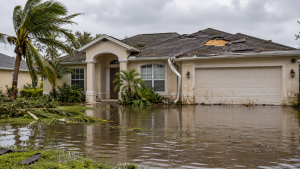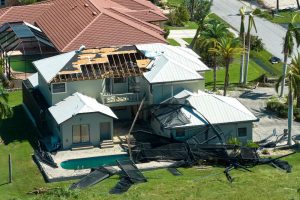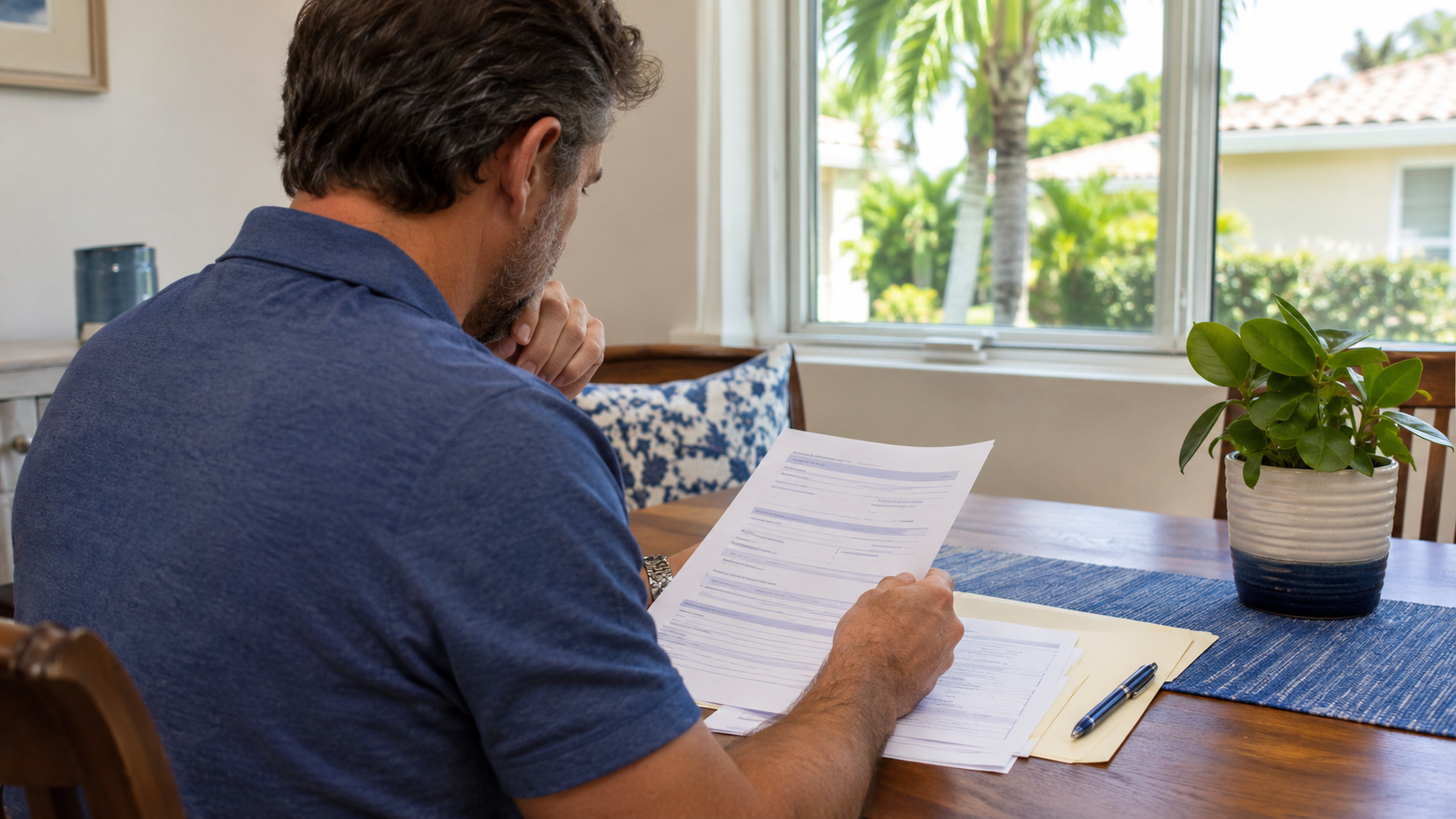
Citizens flood insurance requirements reach their final scheduled phase in 2027. For affected policies issued or renewed on or after January 1, 2027, flood insurance will be required regardless of dwelling value, including for homes outside high-risk flood zones.
Start with your policy form, renewal date, and existing flood coverage. Those details determine what you need to address before the next policy term.
Citizens Flood Insurance Requirements: Who Is Affected in 2027?
Florida Statutes § 627.351(6)(aa) establishes the requirement and its exceptions. For affected properties outside a Special Flood Hazard Area, the phase applying to dwelling replacement costs of $400,000 or more began in 2026. Beginning January 1, 2027, the schedule reaches the remaining affected personal residential policies, regardless of dwelling value.
Citizens applies this requirement to new and renewing policies. If your home enters the final phase and your policy renews in March 2027, review the flood requirement for that renewal. Do not assume every existing policy changes on January 1.
Affected properties within a Special Flood Hazard Area were subject to earlier deadlines in 2023. The 2027 phase does not postpone an obligation that already applies.
Which Policies Are Exempt?
The statute exempts Citizens policies that do not cover wind and policies written on a condominium unit owners form.
Citizens’ current flood guidance also lists tenant contents policies as exempt. Ask your agent to confirm the form under which your property or belongings are insured.
An exemption from Citizens’ requirement does not provide flood coverage. Review flood protection separately, along with any lender requirements.
What Coverage Should You Review?
Citizens does not provide flood insurance. The Florida Department of Financial Services explains that flood coverage is available through the National Flood Insurance Program (NFIP) and private insurers. Ask your agent to confirm that the proposed coverage meets Citizens’ requirements.
Citizens generally requires flood building coverage at least equal to the dwelling coverage amount shown under Coverage A of the Citizens policy. If that amount is unavailable through the NFIP, Citizens accepts the maximum NFIP coverage for which the insured is eligible.
For homeowners in the NFIP’s regular program, building coverage is generally available up to $250,000. Meeting Citizens’ eligibility requirement can therefore leave a difference between the flood limit and the amount needed to rebuild. Review that difference with your agent.
Also check contents coverage, deductibles, exclusions, and how losses are valued. NFIP building and contents coverage are typically purchased separately and have separate deductibles.
Our Florida wind and flood damage guide explains why different policies may respond to damage from the same hurricane.
Review the December 2026 Policy Changes
Citizens has announced policy form changes effective December 1, 2026, for new and renewal business.
For affected policies, the new flood condition states that wind coverage may be unavailable if Citizens verified flood insurance at issuance or renewal but the required flood coverage is not in force on the date of the wind loss.
The bulletin also states that, when requested, the insured must return a signed authorization to release flood insurance information within 30 days after receiving the form. Failure to return it may preclude wind coverage. These conditions do not apply to the HO-4, HO-6, HW-4, and HW-6 forms.
Review the forms issued with your policy. Maintaining required flood coverage throughout the term matters beyond the renewal transaction.
What to Check Before Renewal
Use the renewal process to resolve specific questions:
- Confirm applicability. Ask your agent to identify your policy form, renewal date, flood zone, and whether the requirement applies.
- Compare the policies. Check the insured address, building limit, deductible, and effective and expiration dates. Ask how the proposed flood coverage satisfies Citizens’ requirements.
- Submit the required documents. Citizens requires proof of qualifying flood coverage and a completed Policyholder Affirmation Regarding Flood Insurance, CIT FW01. A flood declarations page is one accepted form of proof. Confirm what documentation is needed for your transaction and that it was received.
- Keep accessible records. Save both policies, payment confirmations, renewal notices, signed forms, and correspondence. Our hurricane claim documentation guide provides a broader recordkeeping checklist.
Start early. NFIP guidance on buying flood insurance explains that coverage generally has a 30-day waiting period, with exceptions. Confirm the actual effective date before relying on a new policy. If considering private flood insurance, ask about that policy’s timing and conditions separately.
When a Coverage Dispute Arises
Your insurance agent can address purchasing coverage and documenting eligibility. If an insurer disputes a property damage claim, preserve the applicable policies, renewal documents, proof of flood coverage, and the insurer’s written explanation. The policy language and facts of the loss will matter.
At Tighe P.A., we represent Florida property owners in disputed property insurance claims. Visit our Property Insurance Claims page or call 1-855-LOSS-PRO (567-7776) to request a consultation.
This article provides general information and is not legal advice. Coverage and legal rights depend on the applicable policy, Florida law, and the facts. Requirements may change.
You May Also Like:
- Wind Damage vs. Flood Damage in Florida: How Insurance Coverage Differs After a Hurricane
- Citizens Insurance Company Suggests Massive Changes to the Appraisal Process in Florida
- Patriot Select Insurance Reviews: What Florida Homeowners Should Know in 2026
- The $10,000 Water Damage Cap: What Florida Homeowners Need To Know