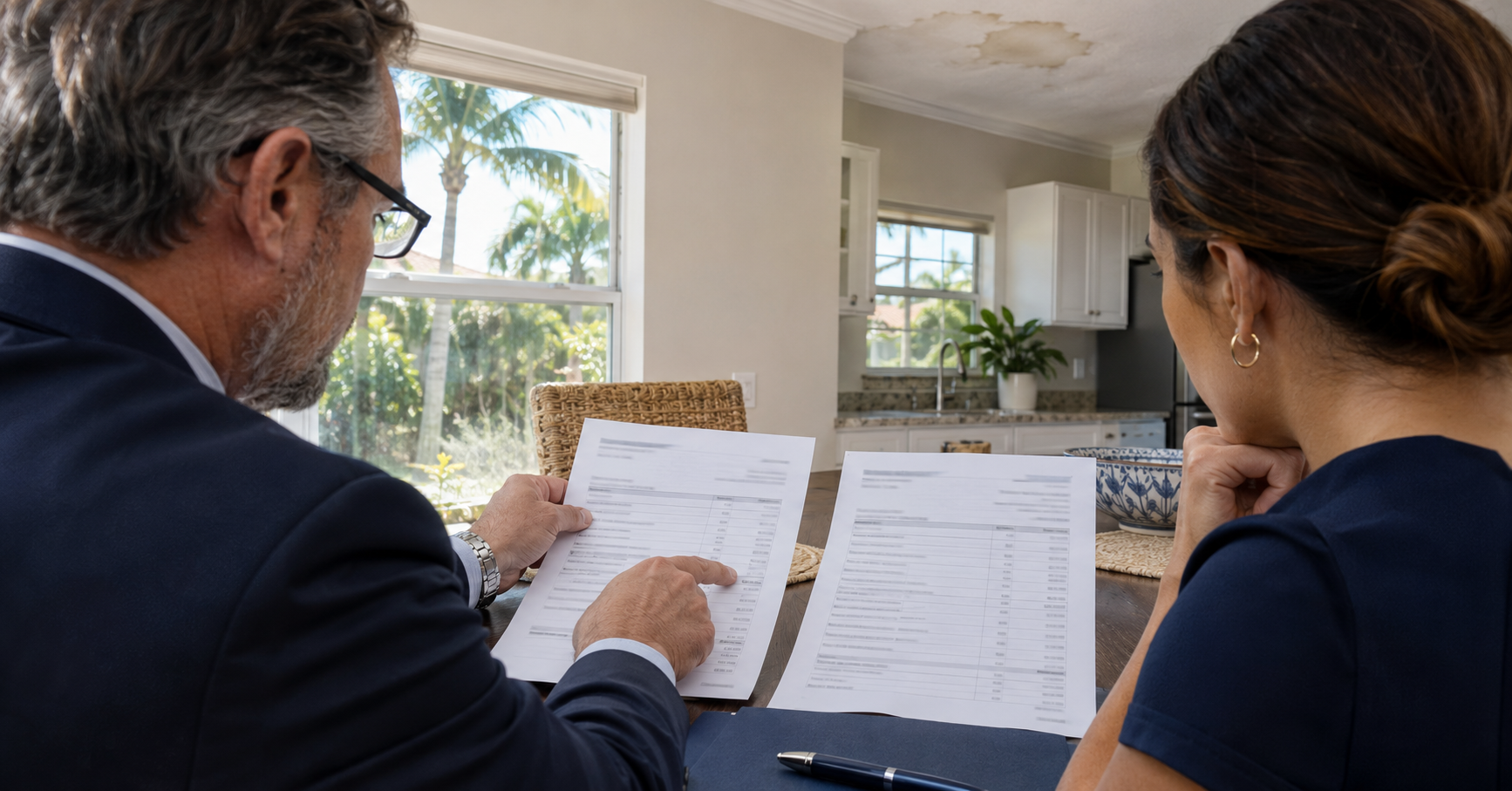
When an insurance adjuster and a contractor give you different estimates, I start with one question: Are they pricing the same work?
One estimate may include repairs to a damaged section of ceiling. The other may include removing more drywall, repairing damage behind it, and repainting the surrounding area. Compare what each estimate includes before comparing the totals.
What Each Estimate Tells You
The insurer’s adjuster prepares an estimate as part of the claim evaluation. It reflects the damage and repair costs identified at that stage. The contractor’s estimate shows what work the contractor proposes and what it expects to charge.
A contractor can explain why a repair is needed and what it will cost. Whether the policy covers that work depends on the policy and the facts of the loss.
Why the Estimates May Differ
Scope of work. One estimate may call for a repair while the other proposes replacement. Compare measurements, quantities, materials, and the steps needed to complete each repair. A missing line item may account for much of the difference.
Labor and materials. Two estimates can price the same work differently. Ask what supports the price and whether both estimates assume the same materials, labor, and equipment.
Damage found during repairs. Removing damaged drywall or flooring can reveal conditions that weren’t visible during the initial inspection. Once it’s safe, photograph what was found, ask the contractor to describe it in writing, and notify the insurer promptly so it can evaluate the additional damage.
Code and permit requirements. Ask the contractor to identify the applicable requirement and price that work separately. Florida Statutes § 627.7011 addresses offers of replacement cost and law and ordinance coverage. Whether a specific expense is covered depends on the policy and its limits.
Matching materials. When replacement items differ in quality, color, or size, Florida Statutes § 626.9744 requires reasonable repairs or replacement in adjoining areas if the statute applies and the policy does not provide otherwise. Cost, the uniformity that can be achieved, and the remaining useful life of undamaged materials can affect how far that work extends. A mismatch alone does not establish that an entire roof or floor must be replaced.
Why the First Insurance Payment May Be Lower
Compare estimate to estimate first. Then compare the insurer’s estimate with its payment explanation. This helps separate differences in scope or pricing from adjustments such as depreciation or a deductible.
The Florida Department of Financial Services explains the distinction. Replacement cost generally reflects the cost to repair or replace damaged property without deducting depreciation. Actual cash value generally accounts for depreciation.
Under Florida Statutes § 627.7011, if a dwelling is insured on a replacement cost basis, the insurer generally must initially pay at least the actual cash value of a covered loss, less any applicable deductible. Remaining amounts needed for covered repairs are generally paid as work is performed and expenses are incurred. The statute also provides separate rules for certain roof deductible situations and total dwelling losses.
What to Do When the Contractor’s Estimate Is Higher
- Get the insurer’s detailed estimate and payment explanation. Under Florida Statutes § 627.70131, if the insurer’s adjuster generates a detailed loss estimate, the insurer must send the policyholder a copy within seven days after the adjuster generates it. The statute does not require the insurer to create a detailed estimate if one is not reasonably necessary for the investigation.
- Ask the contractor for an itemized estimate. Request measurements, quantities, materials, labor, and any permit or code costs. Verify the contractor’s licensing and insurance before signing a repair agreement. The Florida Department of Financial Services’ contractor guidance is a useful starting point.
- Send the insurer the specific differences in writing. Identify the disputed items and attach supporting photos, measurements, or inspection findings. If the contractor found additional damage, ask whether the insurer wants to reinspect. Keep copies of what you send and the insurer’s response. Our Florida hurricane claim documentation guide explains what records to keep.
Can a Contractor Negotiate the Claim?
Florida Statutes § 626.854 allows a contractor to discuss or explain a qualifying repair bid to the homeowner or insurer under the conditions set out in the statute. A contractor’s license alone does not authorize the contractor to provide public adjusting services or negotiate a settlement on the homeowner’s behalf.
When the Difference Remains Unresolved
A higher contractor estimate does not, by itself, establish that a claim was underpaid. If the insurer’s estimate omits work or uses a different price, ask for the reason. A disagreement about how much drywall to replace calls for different evidence than a disagreement about what caused the damage or whether the policy covers it.
At Tighe P.A., we represent Florida property owners in disputes over denied or underpaid property insurance claims. If you’ve compared the estimates and still can’t reconcile the difference, visit our Property Insurance Claims page or call 1-855-LOSS-PRO (567-7776) to request a consultation.
This article is for general information and is not legal advice. Coverage and payment depend on the applicable policy, Florida law, and the facts of the loss.